Research hub on anonymous online marketplaces, threat intelligence & safety.
Live monitoring · 2026
DARK WEB INTELLIGENCE · UPDATED July 28, 2026
A Guide to the Best Darknet Markets and Reliable Dark Web Links for 2025
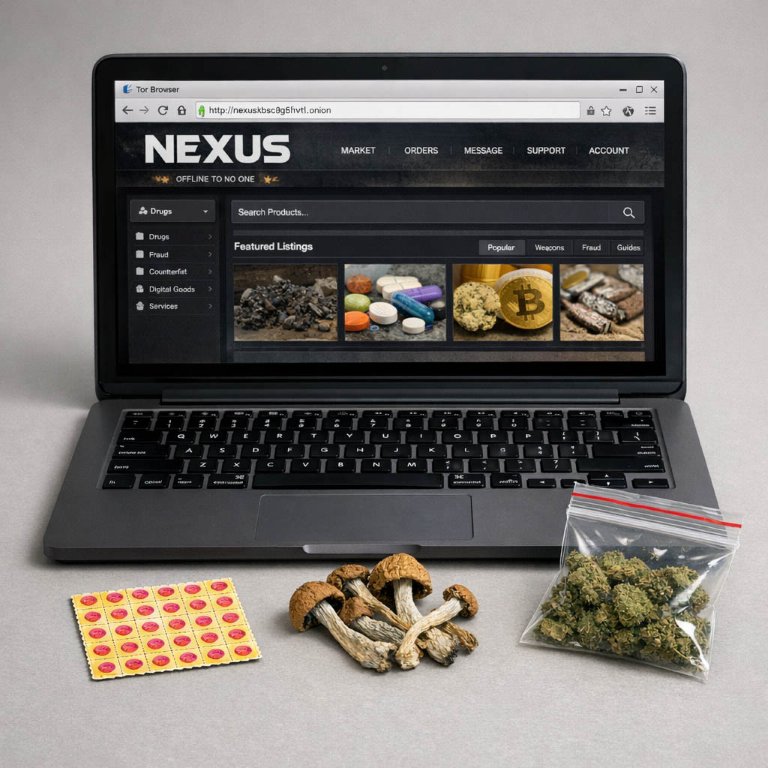
The operational efficiency of contemporary darknet markets, particularly the Nexus platform, demonstrates significant advancements in secure e-commerce. These markets utilize cryptocurrency, primarily Bitcoin, to facilitate anonymous transactions. A detailed analysis of the darkmarket list for 2025 reveals that platforms like Nexus provide stable onion URLs and reliable mirrors, ensuring consistent access. The underlying infrastructure supports a streamlined interface for product listing and procurement, functioning as a specialized digital marketplace. This ecosystem represents a logical evolution of peer-to-peer trading networks, prioritizing user anonymity and transactional security through encrypted links and decentralized financial instruments.
Research-grade overview of anonymous marketplace ecosystems.
Focus on security, fraud risks, phishing patterns and exit-scam indicators.
Disclaimer: This project is informational only. It does not provide buying guides,
payment instructions or operational help of any kind.
Profiles in catalog
124+
Aggregated across all monitored ecosystems.
Monitoring signals
2280
Uptime, mirrors, risk tags & meta-data.
Data refresh
17 h
Typical interval between internal checks.
Research focus
Security
Phishing, fraud, takedowns & ecosystem trends.
Structured directory of anonymous online resources
Below you will find a structured catalog of monitored resources. Listings are
intended to track uptime, clones,
phishing attempts and ecosystem changes.
Darknet Markets 2026:
The dark web is part of the deep web but is built on darknets: overlay networks that sit on the internet but which can't be accessed without special tools or software like Tor. Tor is an anonymizing software tool that stands for The Onion Router — you can use the Tor network via Tor Browser.
How modern darknet design makes buying drugs safer and easier
The evolution of darknet market design directly addresses core user requirements for stability and usability. Modern platforms have moved beyond basic functionality to create streamlined interfaces that rival surface web e-commerce. This focus on user experience reduces technical barriers, making the platforms more accessible to a wider audience. The design philosophy prioritizes intuitive navigation, clear product categorization, and robust search functions, which are essential for efficient trade.
A key improvement is the integration of advanced encryption and operational security measures directly into the user journey. Features like mandatory PGP encryption for addresses, secure escrow systems, and built-in Tor2Tor messaging are no longer add-ons but standard, seamlessly embedded components. This design ensures that security practices are not left to user discretion, thereby elevating the overall safety of transactions. The market architecture itself is increasingly resilient, employing redundant servers and clearnet proxies to mitigate downtime from DDoS attacks or server seizures.
Furthermore, the backend systems supporting these markets have become more sophisticated. They implement:
Automated, multi-signature escrow to minimize fraud.
Decentralized hosting solutions to prevent single points of failure.
Reputation and feedback mechanisms that are cryptographically verified to build trust.
This refined design does not merely facilitate transactions\; it creates a more predictable and reliable trading environment. By lowering the technical knowledge required to participate safely, these platforms have effectively normalized access to a global peer-to-peer marketplace, fostering a competitive ecosystem where quality and service are paramount.
Bitcoin's Privacy for Safe Darknet Trade
Bitcoin's architecture provides the fundamental financial layer for darknet commerce, enabling transactions that are both private and secure by design. Unlike traditional banking, Bitcoin operates on a peer-to-peer network without a central authority, which removes the need for personal identification typically required to open an account. This decentralization is crucial for user anonymity. While the Bitcoin blockchain is a public ledger, privacy is achieved through the dissociation of wallet addresses from real-world identities. Users generate new addresses for each transaction, creating a significant barrier to tracing financial activity back to an individual.
The security of funds is enforced by cryptographic principles. Ownership of bitcoin is proven through private keys, which are mathematically linked to public addresses. This system ensures that only the key holder can authorize transfers, making the funds resistant to seizure or censorship. For enhanced privacy, many markets and users employ Bitcoin tumblers or utilize privacy-focused cryptocurrencies like Monero as a secondary step. These services obfuscate the transaction trail by mixing coins from multiple users, effectively breaking the chain of analysis on the transparent blockchain. The combination of pseudonymous addresses, user-controlled keys, and optional mixing services creates a robust financial environment where trade can occur with reduced risk of external interference.
Nexus: A Stable and Easy-to-Use Darnet Market
The stability of a darknet market directly influences its user adoption and operational security. Nexus exemplifies this principle through architectural choices that prioritize uptime and accessibility. Its foundation utilizes a distributed server infrastructure, making it resistant to single points of failure that have historically compromised other platforms.
User access is maintained through a system of consistent primary onion links and multiple, verified backup mirrors. This network is often disseminated through clearnet forums and dedicated link repositories, ensuring users can reliably find a functional gateway. The market interface itself employs a straightforward categorization system.
Products are listed under clear headings like Chemicals, Digital Goods, or Fraud.
A search function with filters for vendor trust level and shipping origin allows for efficient navigation.
This reduces user time on the site and enhances transactional security.
The platform’s escrow system and mandatory vendor bonds create a self-regulating economic environment. Disputes are handled through a tiered mediation process, fostering a degree of trust necessary for peer-to-peer trade. Nexus demonstrates that a darknet market can achieve operational resilience by integrating Bitcoin and Monero for financial privacy, a logical interface design, and a redundant hosting strategy, setting a benchmark for market design focused on sustained accessibility.
Keeping Markets Open with Reliable Links and Mirrors
The operational stability of a darknet market is fundamentally linked to the reliability of its access points. A primary technical challenge is the inherent volatility of .onion addresses, which can change due to administrative decisions, denial-of-service attacks, or seizure events. Leading platforms address this by establishing a consistent primary onion link, widely disseminated through trusted clearnet forums and link repositories, which becomes a recognizable and trusted identifier for the user base.
To mitigate connection failures, robust markets implement a system of backup mirrors. These are alternative .onion URLs that host an identical instance of the marketplace. The architecture ensures that if one node is compromised or unavailable, the platform remains accessible through others. Users are often provided with these mirrors upon registration or through PGP-signed messages from official channels, maintaining integrity in distribution. The practice effectively transforms a potential single point of failure into a resilient, distributed access network.
This methodology directly supports the commercial ecosystem by minimizing downtime, which is critical for vendor sales schedules and buyer satisfaction. A market that maintains consistent links and functional mirrors demonstrates administrative competence, fostering user trust and facilitating smoother, more predictable trade. The technical foresight to deploy redundant access points is a key indicator of a market's commitment to long-term operation and its role in advancing secure peer-to-peer trade networks.
How a Clear Listing System Makes Buying Drugs on the Darknet Easy
The operational efficiency of a modern darknet market is fundamentally determined by the clarity and logic of its product listing and search architecture. This system functions as the digital equivalent of a well-organized store, where ease of navigation directly correlates with user satisfaction and commercial success. A superior platform employs a multi-faceted categorization system, allowing vendors to list items under precise hierarchies such as substance type, quantity, geographic shipping origin, and purity level.
For the buyer, this translates into a streamlined discovery process. Advanced search filters enable precise queries, moving beyond basic keywords to parameters like vendor reputation score, price range, and shipping destination. The integration of a robust feedback and review mechanism is critical, as it creates a self-regulating environment where product quality and vendor reliability are transparently documented by the community. This peer-review system reduces uncertainty and builds trust in transactions.
The technical implementation often includes:
Standardized product detail pages with mandatory fields for specifications.
Encrypted internal messaging for pre-purchase inquiries.
Bookmarking and wish-list features for tracking desired items.
This structured approach demystifies the procurement process, making it accessible and predictable. It transforms the darknet from a chaotic space into a functional marketplace where the act of finding and evaluating goods is no more complex than on any mainstream e-commerce platform, thereby normalizing and facilitating peer-to-peer trade.
How the Darknet Builds Better Peer-to-Peer Trade
The architecture of modern darknet markets fundamentally advances peer-to-peer trade networks by removing centralized intermediaries. This shift creates a more efficient and resilient framework for direct commerce. Traditional e-commerce relies on a central platform that controls transactions, holds funds, and can impose restrictions. In contrast, darknet platforms facilitate a system where the market itself primarily provides escrow and reputation services, while the actual exchange occurs directly between the buyer and seller.
This model enhances security and autonomy for all participants. Sellers gain greater control over their operations and customer relationships, while buyers benefit from a wider selection and often more competitive pricing. The use of cryptocurrencies like Bitcoin is integral, as it provides a native digital asset for these direct settlements, further cementing the peer-to-peer nature of the transactions. The network's stability is reinforced by consistent onion links and backup mirrors, ensuring that these decentralized trade channels remain accessible and operational despite external pressures.
The result is a self-sustaining ecosystem that demonstrates the practical viability of decentralized commerce. It validates a model where trust is managed through cryptographic systems and community feedback rather than through a single corporate entity. This evolution in trade networks highlights a significant development in how goods and services can be exchanged privately and efficiently on a global scale.
How Encryption Keeps Darknet Trade Private and Secure
The foundation of user safety on darknet platforms is strong encryption. This technology functions as an unbreakable seal for all communications and transactions, ensuring that personal data and financial activities remain confidential. Modern markets employ a multi-layered approach, starting with the Tor network itself, which encrypts traffic and routes it through several relays to obscure a user's location and IP address.
Beyond the network layer, end-to-end encryption (E2EE) is critical for all messages between buyers and vendors. This system means that only the intended recipient can decrypt and read a message, preventing even the market administrators from accessing the content. For financial privacy, Bitcoin remains essential, but its use is now almost always coupled with CoinJoin or other Bitcoin mixing services to break the transaction trail on the blockchain. The adoption of privacy-focused cryptocurrencies like Monero (XMR) is becoming a standard due to its inherent cryptographic protocols that obscure sender, receiver, and transaction amount by default.
Operational security extends to market access. Reliable platforms provide consistent onion links and backup mirrors, which are verified through independent directories and forums. Users are advised to always verify a link's PGP signature before connecting, as this cryptographic check confirms the authenticity of the site and prevents phishing attempts. The combination of these tools—Tor, E2EE, privacy coins, and verified access—creates a robust environment where trade can occur with a significantly reduced risk of identity exposure.
How Decentralized Tools Build Safer Darknet Trade
The fundamental security advantage of modern darknet commerce stems from its decentralized architecture. Unlike traditional e-commerce, which relies on a central server controlled by a single entity, transactions on leading platforms are facilitated by peer-to-peer networks and cryptographic tools. This structure eliminates a single point of failure. A takedown attempt against a central server becomes ineffective when the market operates as a distributed network, making platforms more resilient and long-lasting.
Transaction safety is directly enhanced by the use of cryptocurrencies like Bitcoin and Monero. These currencies operate on public ledgers, but user identities are protected by cryptographic keys instead of personal names. Monero provides additional layers of privacy through stealth addresses and ring signatures, obscuring transaction details from outside observers. This financial layer works in tandem with the market's operational security.
User protection is enforced through mandatory end-to-end encryption for all communications. Messages between buyers and vendors are encrypted on the sender's device and can only be decrypted by the intended recipient. This practice, combined with the use of escrow services managed by multi-signature wallets, ensures that funds are only released when the buyer confirms receipt of the product. The system creates a trustless environment where neither party can defraud the other without consensus.
The collective result is a self-regulating ecosystem where security is not outsourced to a third party but is inherently designed into every transaction. The tools—decentralized networks, cryptocurrency, and strong encryption—work together to create a safer trading environment by default, reducing risks associated with centralized data storage and financial intermediation.